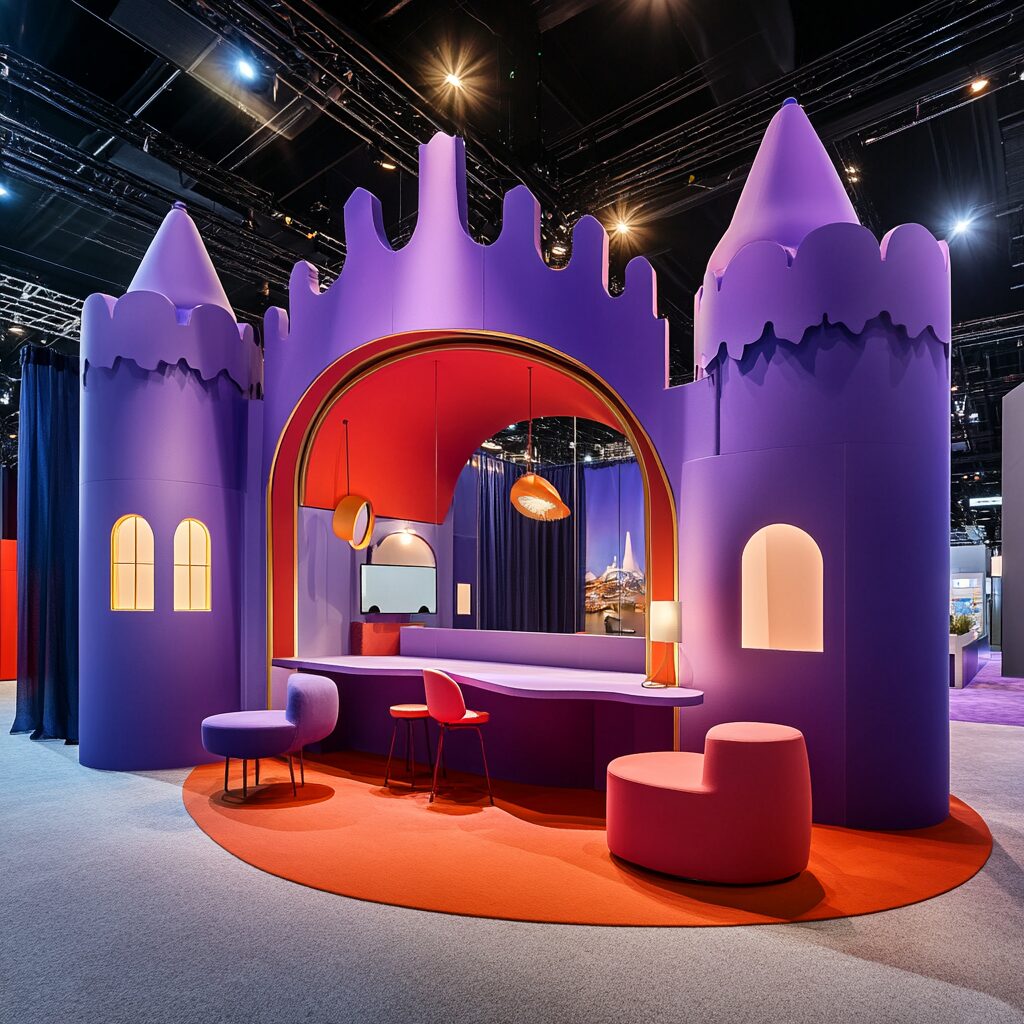
Artificial Intelligence is here to stay. Also in the world of Experience Design. We increasingly see that customers send visuals in their briefing generated by Midjourney or DALL·E: high-end, atmospheric, seductive. But unfortunately often also: unrealistic. Not appropriate to the budget, not feasible within time and technique and rarely in line with brand identity or corporate identity.
Yet at Boozed we do not believe in "no" to AI. We believe that AI can add a lot, provided you put it in the right way. In this article we take you into account how we see designers AI: not as a substitute for creativity, but as an accelerator, inspirator and sparring partner.
Expectation vs. reality: the gap
When customers send AI-generated images in a briefing, there is often already unintentionally an expectation gap. These visuals are atmospheric, conceptual and speak to the imagination. But:
- They do not take into account technical limitations or safety requirements.
- They're ignoring the budget.
- They are often not feasible with real materials and human hands.
- And not unimportant: they are usually not in line with the visual identity of the brand or event.
The result? Our designers have to sell "no." And that is sin, because the energy and inspiration of such a first image can be used—provided we use AI in a different way.
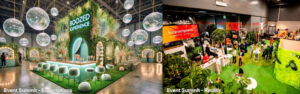
We ourselves are guilty of this expectation gap! For the Sustainability Square on the EventSummit we were our own customer, but also in marketing expressions this visual could create unrealistic expectations.
Al as assistant, not as final designer
Let's get this straight. AI is not (yet) a replacement for an experienced designer or work preparation. But it is a tool that can strengthen our work. Remember:
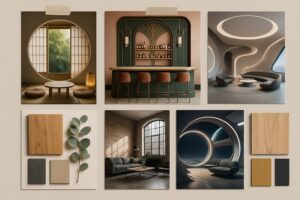
- Explore atmosphere and style
Al helps to enrich moodboards in the first phase and to explore different atmosphere worlds. It gives fast direction, opens creative directions and provides guidance for conversations. - Inspiration outside your bubble
Designers often search within well-known paths. AI can make visual suggestions that fall outside the standard style and therefore create surprising combinations. - Sketch instead of promise
If we use AI as a sketch tool, we can do much faster with a customer visually sparring without immediately making a promise that we need to nuance later.
Visual brainstorms with the whole team
Moodboards or AI images can be discussed with technology, production and customer, so ideas can be tested more quickly for feasibility.
What AI can't (yet) build, test, feel
Our designers work with SketchUp, Adobe Suite and technical software. They not only create atmospheric visualizations, but also construction drawings, work drawings and production preparation. They know where the weight comes from, how you transport something, how long it takes to build and where to work safely.
Al can't (yet) help. In fact, many AI images are literally physically impossible. Think of floating objects, materials that do not exist or illogical perspectives.
An AI tool doesn't know how to build a theatrical entrance that also meets fire safety standards on a stock market floor with 8 hours of construction time and 2 staff. Our people do.
Floating lamps and XXL clouds: Amazing as inspiration, but not thought out in drawings and materials.
We use AI in a smart way
At Boozed we actively experiment with AI as part of our creative process. Examples include:
- We generate AI images to test different style directions in an early concept phase.
- We combine AI visuals with hand-drawn sketches or renderings in SketchUp to create realistic scenarios.
- We use Al as a moodboard partner, not as an end result.
- We deliberately discuss AI images with customers to manage expectations and to keep the translation to physical space clear.
By using AI smartly, we control the direction and make sure that the creative dream can actually be realized.
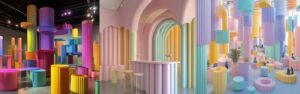
So we got inspiration from AI generated atmospheric images for our new B Corp product line: furniture made of cardboard tubes that would otherwise be thrown away.
Customer tips: so you work smartly with a designer and AI
If you are working on a briefing or pitch and want to use AI as support, then here are a few tips:
- Use AI for atmosphere, not for the final image.
Think of colors, materials, lighting and emotion. Leave the idea open. - Be clear about your budget and conditions.
A floating LED installation of 12 meters sounds cool, but not like the budget €15,000 is. - Share your AI images as a starting point, not as a fixed concept.
Give your designer the space to make something beautiful out of it that works. - Ask for feedback on feasibility.
Our designers think not only in beautiful pictures, but also in smart solutions.
The future: AI as co-pilot in design
We don't see Al as a threat, but as an opportunity. It simply requires a new way of working together: with each other and with the tools. There may soon be an AI that automatically runs an exhibition stand, on a scale, with lighting plan, material list and flow analysis. But one thing remains to be done: human creativity, experience and fingerspitzengefühl.
At Boozed we like to combine the best of two worlds: technological innovation and craftsmanship. Together we ensure that the experience is not only impressive on image, but also in real life.